Forestry Industry Has The Potential To Solve Our Twin Housing and Climate Challenges – We Need To Start Building With Timber
Forestry Industry Has The Potential To Solve Our Twin Housing and Climate Challenges – We Need To Start Building With Timber


Ireland is facing two defining challenges at once: how to build enough homes, and how to do it without locking in decades of additional carbon emissions.
VThe focus has largely been on planning, land and cost. But far less attention has been paid to the materials we build with, and the industries that supply them.
Forestry has long been a quiet success story in Ireland, supporting rural economies with 12,000 sector jobs, and a strong export market. But its role in solving today’s challenges is still underused.
Forest Industries Ireland, founded in 2019 as part of Ibec, represents the full forestry and timber supply chain. Our role is to advocate for sustainable growth, innovation and investment across the sector.
As Director of FII, I want to set out the opportunities within these twin challenges, and what government, industry and landowners need to do to grasp it.
For Ireland to reach its housing target of 300,000 new homes by the end of 2030, we need to be building around 50,000 homes every year. Last year, we delivered just over 36,000. Projections for 2026 and 2027 show only modest increases.
Anyone can see the sums aren’t adding up.
Every month we don't build more, the gap widens, the affordability crisis deepens, and another cohort of young people weighs up their future in Berlin, Sydney or Lisbon instead of Dublin, Cork or Galway.
We have spent years debating planning reform, site activation, zoning and densification, all of which matters. There is another opportunity we need to capitalise on: building with timber.
Timber frame housing is capturing a growing market share in Ireland because it is cost competitive and faster to build.
Mass engineered timber construction can cut months off multi-storey builds. But there are height restrictions under Irish building regulations.
On a traditional build, every pour of concrete is often dictated by the weather. In a timber factory, rain is irrelevant. Panels arrive on site numbered and sequenced and a semi-detached unit that would have taken a full winter to dry out can be erected and closed within weeks.
Scandinavia, Scotland and Japan give us clear examples of the way ahead. In Scotland, 85 per cent of new builds are timber frame. Meanwhile, here in Ireland, only around a quarter are.
To reach our ambitious housing targets, we need to innovate.
Timber also provides a practical solution to another constraint slowing down construction: labour.
Ireland is expected to require a significant increase in construction workers over the coming years, at a time when we are already seeing significant skill shortages. Off-site timber construction helps reduce the reliance on on-site labour and puts a limited workforce to more efficient use.
Building with timber is how we meet our climate targets too. Construction and the built environment contribute over 30 per cent of total annual greenhouse gas emissions. Around a third of this is attributed to embodied carbon from traditional construction methods and materials.
Timber can solve this problem. A cubic meter of timber sequesters around a tonne of CO2, and that carbon stays locked in the building over its lifespan, creating a long term carbon store.
The Market Opportunities for Timber Construction in Ireland report, published in October 2025, found that scaling timber construction could unlock a carbon displacement potential of 2.8 million tonnes of CO2 equivalent by 2030.
We already have a strong supply in hand, but we need to keep planting trees to keep up with future demand.
Forestry has been a success story for Ireland for decades. Today, the sector supports a strong domestic industry and a significant export market, worth over €1 billion annually.
The forests planted in the 1980s and 1990s are now maturing. Between now and 2040, more than 100 million cubic meters of timber will be harvested in Ireland.
This creates a clear opportunity to use more of that resource at home, particularly in housing.
There is also strong potential for timber adoption to increase significantly in residential construction over the coming years, supported by proven methods and growing demand.
Based on the Market Opportunities report, timber adoption could reach 70 per cent of new residential buildings by 2030.
But this opportunity will only be realised if we address the structural barriers that remain.
While Ireland’s policy direction, including the National Development Plan, supports modern methods of construction, the regulatory environment has not fully caught up.
Challenges around certification, fire safety requirements, and inconsistent interpretation of standards continue to slow progress.
At the same time, domestic capacity for producing advanced engineered timber products is also limited. WE need to invest in this space and this will require long-term market certainty particularly through green public procurement.
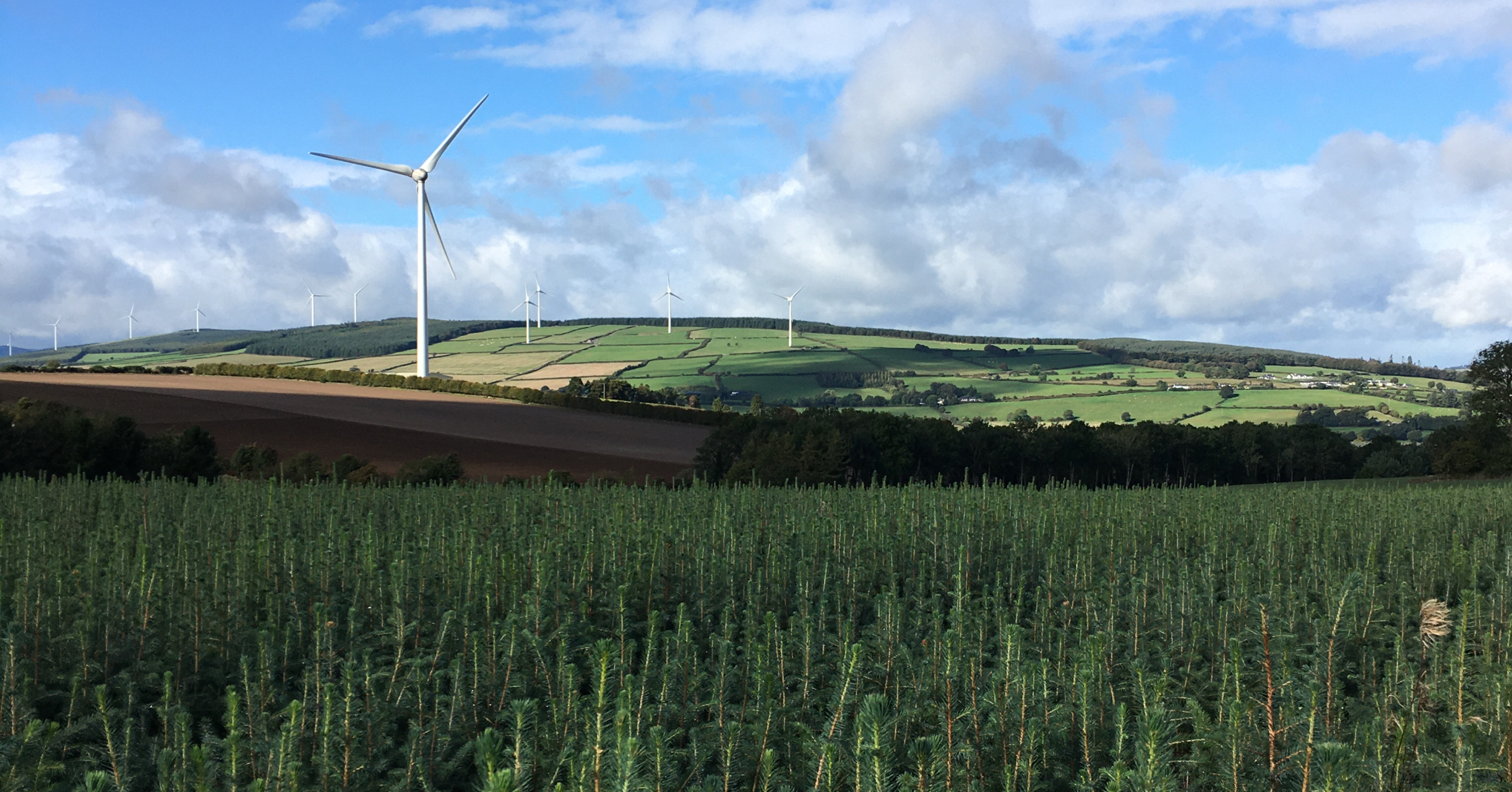
All of this needs to be underpinned by raw material supply. Right now, we are planting around 2,000 hectares a year. That figure needs to be closer to 8,000 hectares per annum to create a long-term growing supply of timber.
If we are serious about the long-term delivery of homes, about reaching climate targets, and of a functioning forest economy, we need to ensure we are planting more forests.
Forestry must compete with other land uses, and for many landowners, the forestry option is not on their radar.
Unless we build confidence in forestry among the farming community, the 8,000 hectare target will not be realised.
We need to reduce red tape in our forestry schemes, speed up licensing, and make the forestry option more attractive to landowners.
Ultimately, it is a financial decision, and the rewards need to be there. Forestry premium payments are generous but could be front-loaded to make them more attractive. Landowners also need to be able to plant highly productive forests which deliver strong returns at harvest time.
A sustainable mix of native broadleaves and productive commercial species, chosen site by site rather than through a blanket system, gives us biodiversity, carbon capture and construction timber at the same time.
We don't have to choose between nature and supply, but we do have to choose to plant.
The cost of timber construction, meanwhile, is comparable to traditional building materials, but there remains a belief that timber is the more expensive alternative.
Some high-performance engineered timber products can have higher upfront costs, but the overall cost balances out when set against factors like the speed of construction, reduced labour costs, less waste and long-term energy performance.
The growing popularity of timber usage in the construction industry also means more of these materials are becoming readily available, driving down the cost.
At a time when global supply chains are under pressure and material costs are volatile, timber has also proven relatively stable. That resilience, combined with domestic availability, makes it an increasingly attractive option.
Across parts of the Irish construction and design sector, familiarity with timber as a modern, high-performance material is not where it needs to be. Addressing this through education, training and experience will be essential to increasing confidence and accelerating adoption.
Beyond construction timber, Irish forestry produces the pallets that carry the rest of the Irish economy, packaging, fencing, garden products, and bioenergy that displaces fossil fuels in our energy mix.
The UK, our closest neighbour, is the second largest net timber importer in the world. The World Bank forecasts that global timber demand could quadruple by 2050.
For a small country with a young industrial forest base, that is a generational export opportunity, so long as we have the trees.
If timber construction is to scale, it must be matched by the right regulatory, planning and procurement environment.
That includes dramatically accelerating afforestation through more effective policy; enabling greater use of timber through building regulations; making more land available for forestry; supporting the planting of conifers and productive commercial forests; promoting the use of Irish wood in construction through green public procurement and changes to building regulation; and the establishment of a new, independent Forestry Development Agency.
Across much of the world, timber construction is the norm. If Ireland fails to prioritise it now, we risk locking ourselves into slower, more carbon-intensive building methods while others move faster and greener.
Forestry and timber have been a great success story for Ireland. We need to double down on our commitment to this industry to make sure it can continue to deliver social, economic and environmental benefits, and build the houses that Ireland needs.